

Faith can become visible through a concrete response to what God has made clear.
Sometimes we know the conversation we need to have, the help we should offer, or the responsibility we have avoided. Yet we keep waiting for confidence, perfect timing, or a guarantee that nothing will go wrong.
This lesson asks what it looks like to respond. The biblical stories in this lesson describe people moving because God called them. They invite courage rooted in listening, trust, and obedience. We can begin with the next clear step while remaining willing to receive guidance along the way.
In this lesson, you’ll be invited to
- Recognize fears that can delay a faithful response.
- Distinguish a clear responsibility from an untested impulse.
- Choose a next step that combines courage with discernment.
Willingness becomes visible in action
Isaiah 1:19–20 connects willingness and obedience within God’s address to His people. The passage challenges a habit of claiming blessing while resisting a response. Hearing and doing belong together.
A present-day application might be keeping a promise, telling the truth, asking forgiveness, or offering help. Begin with responsibilities that Scripture already makes clear. A person does not need a dramatic sign before making amends for harm they have caused. Many important steps are quiet and close to home.
Genesis 12:1 gives another picture of response: Abram is called to leave familiar surroundings for a place God will show him. His story helps us consider what makes familiar patterns feel safe and how trust can lead us into a new responsibility. Joshua 1:9 also connects courage with God’s presence, an encouragement to approach a faithful next step with dependence on Him.
Name the obstacle honestly
What obstacle stands between us and a faithful response? Fear may speak through familiar conclusions: ’I failed before,’ ’I have nothing useful to offer,’ or ’Someone else would do this better.’ Repeating those conclusions can keep us from examining them.
Write down the fear and consider what is actually true. Perhaps you need training, support, or a smaller first step. Perhaps you need encouragement to do something already within reach. Prayerful courage can include preparation and wise counsel. It does not require dismissing real limits or ignoring people affected by your decision.

Caleb offers a different response
Numbers 14:24 describes Caleb as having a different spirit and following God fully. The surrounding story contrasts trust in God’s promise with the fear that shaped the wider community’s response.
For a church audience, the question becomes personal: whose outlook is shaping my decisions? We can acknowledge difficulty without allowing anxiety or comparison to make every choice for us. Caleb’s story encourages faithfulness to God even when a fearful response feels more popular.
The Jordan crossing begins with God’s direction
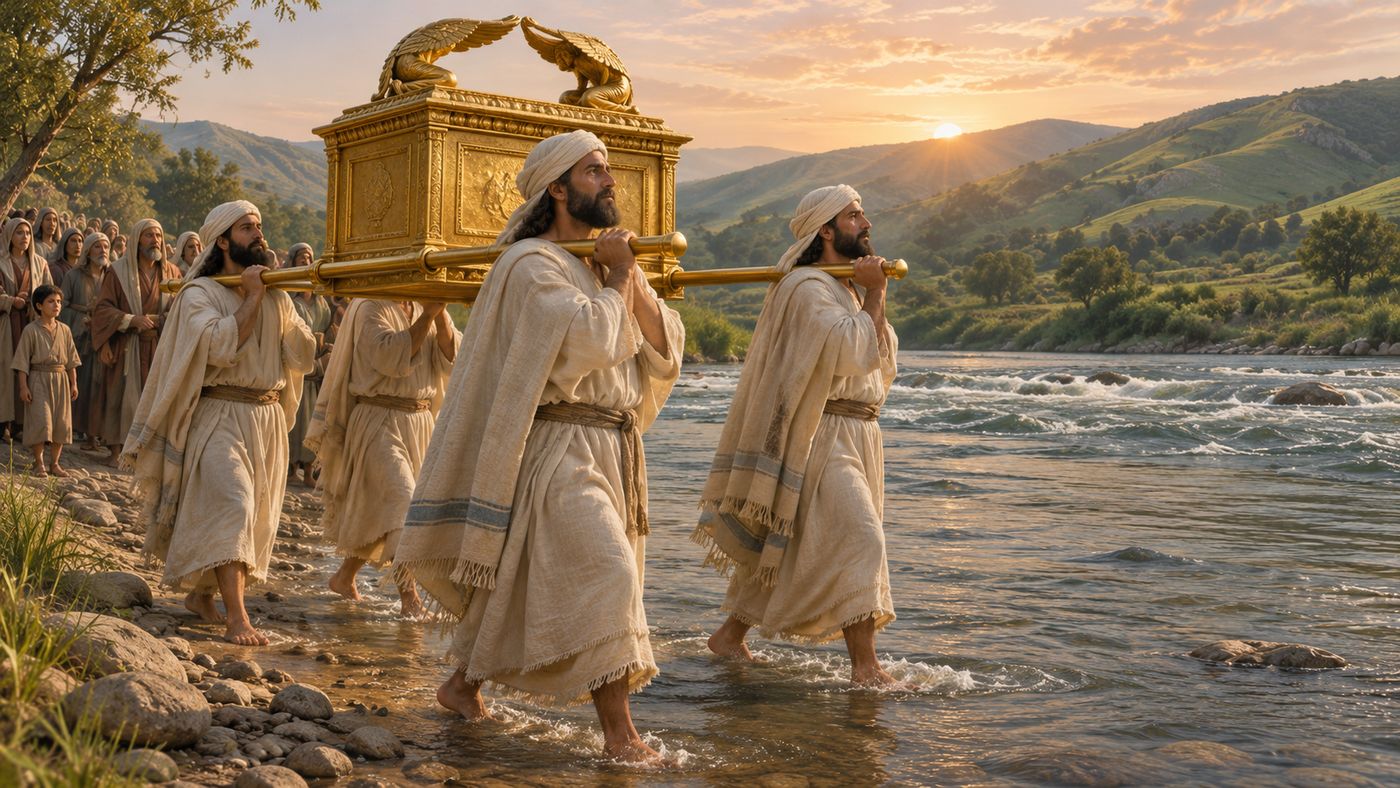
In Joshua 3, the people receive instructions, prepare, and follow the priests carrying the ark. The priests enter the river before the crossing opens. The story holds God’s initiative and the people’s response together.
An important distinction helps us apply it carefully: they are responding to a direction given in the story. We cannot assume that every risky idea carries the same promise. Bring an uncertain decision to prayer, examine it in light of Scripture, and invite mature counsel. Then consider the faithful action available now.
Jesus calls people to respond
Consider Peter stepping onto the water, the man sent to wash at Siloam, and the disciples being sent out. Each account shows a response to Jesus. The circumstances differ, but the relationship with Him gives the action its meaning.
For us, following Jesus may begin with visiting someone lonely, participating in a ministry, speaking honestly about faith when invited, or beginning a needed conversation. Take the step without making another person’s response the measure of your obedience. Keep learning, listening, and seeking support as you go.

Beginning a difficult conversation
Two friends at church have avoided each other after a disagreement. One keeps waiting until she knows exactly how the conversation will go. After prayer and advice from a trusted leader, she sends a short message asking whether they can talk. She prepares to acknowledge her part and listen. She cannot control the outcome, but she can take responsibility for a faithful beginning.
Questions to consider
- What responsibility am I postponing while waiting to feel ready?
- Which fear needs honest examination rather than repeated rehearsal?
- Who can help me discern a decision without simply telling me what I want to hear?
- What would a small, responsible first step look like?
This week: take one clear next step
- Write down one action you believe you should take and why.
- Test that action against Scripture, your responsibilities, and wise counsel where needed.
- Take an appropriate first step this week and reflect on what needs to happen next.
A prayer
Lord, give us courage to respond to You. Help us hear clearly, accept wise counsel, and act with love. When fear makes us hesitate, show us the next faithful step and help us take it. Amen.