

Jesus’ authority calls us to confident prayer, humble service, and faithful allegiance to Him.
The claim that Jesus has authority in heaven and on earth gives the church a foundation for prayer and mission. We can bring needs to Him with confidence and seek His help beyond the limits of our own strength.
The same confession also asks something of us. If Jesus is Lord, our use of influence, our treatment of people, and the way we seek guidance should reflect His character. This lesson holds confidence and humility together as we learn to pray and serve under His authority.
In this lesson, you’ll be invited to
- Explain how prayer in Jesus’ name relates to His character and purposes.
- Connect earnest prayer with forgiveness and care for others.
- Examine sources of guidance through the lens of allegiance to Christ.
Praying in His name shapes what we ask
John 14:12–14 connects asking in Jesus’ name with bringing glory to the Father. Prayer also calls us to seek alignment with God’s will. These themes help us consider the purpose and posture of our requests.
Bring concrete needs to God: healing, wisdom, reconciliation, provision, or courage to act faithfully. Ask with confidence while remaining willing to be changed through prayer. The phrase ’in Jesus’ name’ expresses dependence on Him and allegiance to His purposes. It carries meaning beyond the words placed at the end of a request.

Earnest prayer belongs in an honest community
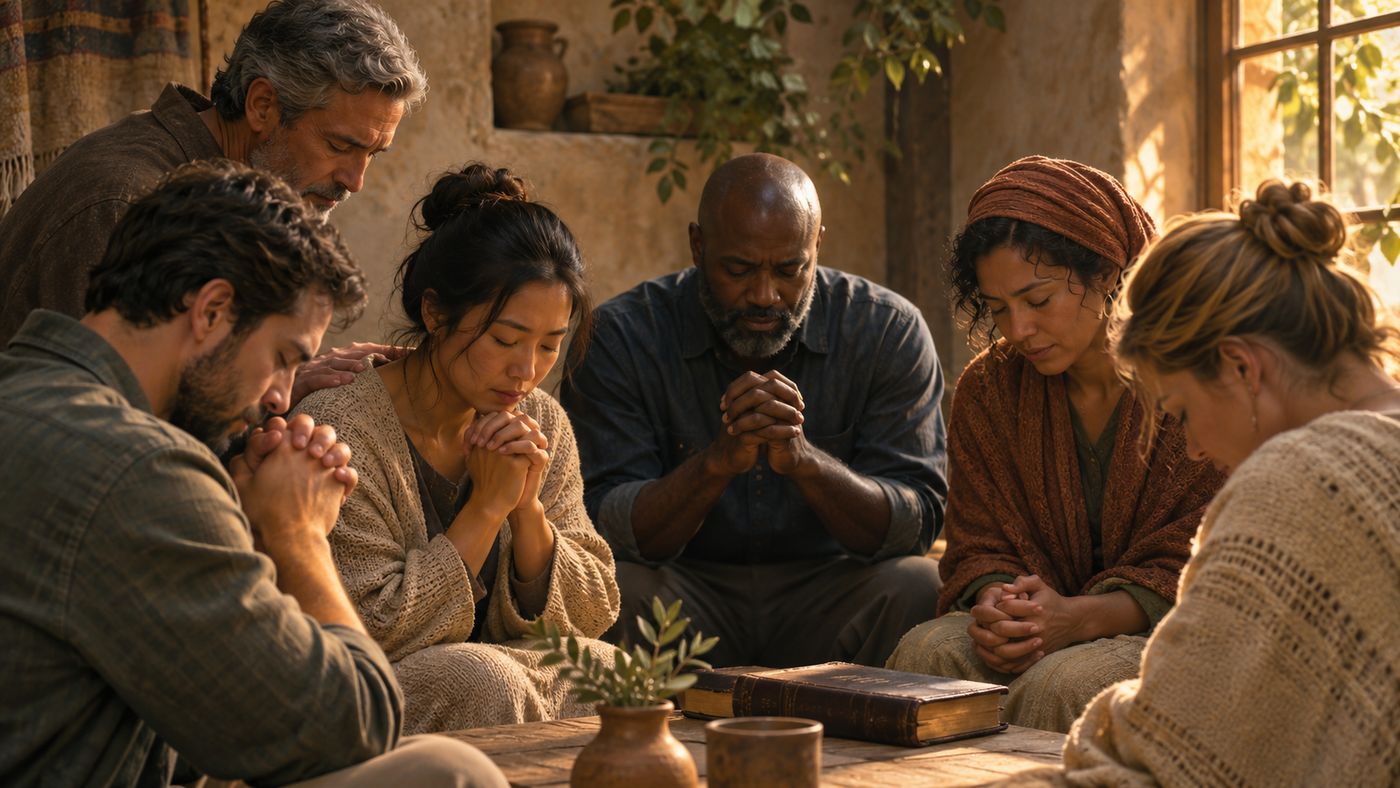
James 5:16 brings confession and prayer for one another into the same conversation. The verse invites a community in which people can acknowledge need and seek God’s help together. Fervency includes sincerity and persistence.
A quiet prayer can be deeply earnest. Someone struggling to find words can still bring a real need before God. When people ask for prayer, listen carefully and respect their privacy. Follow prayer with appropriate care: a visit, a meal, practical help, or support in seeking the assistance they need.
Faith and forgiveness belong in the same lesson
Mark 11:22–25 speaks about faith in God and prayer, then brings attention to forgiveness. Forgiveness therefore belongs alongside the call to believe.
We can pray boldly and also ask whether resentment is shaping our response to someone. Forgiveness can involve a difficult process, and it does not require pretending harm was acceptable or immediately restoring trust. Seek wise support when a relationship involves ongoing harm. Prayer can accompany both a willingness to release vengeance and necessary boundaries.
Stand firm in your allegiance
Ephesians 6:10–12 calls believers to strength in the Lord and describes a spiritual struggle. This raises a question about where we seek power and guidance. The central question is whether a practice draws our trust toward Christ or asks us to locate ultimate control elsewhere.
Examine ideas and methods with care rather than judging people through labels. Practical training, planning, and encouraging words can be useful. Promises that a technique gives us spiritual control deserve scrutiny. Keep Scripture, prayer, and mature Christian counsel central as you decide what to receive and what to leave behind.

Prayer with practical care
A small group learns that a member is facing a serious illness. They ask how she would like them to pray and what help would be useful. They pray confidently for healing, organize meals, and remain present through treatment and uncertainty. Their care expresses dependence on Jesus without making the member responsible for producing a particular outcome.
Questions to consider
- How does my understanding of Jesus shape what I ask in prayer?
- Do I assume that forceful words indicate stronger faith?
- Is there a relationship in which I need to begin working through forgiveness?
- Where do I look for guidance when I feel powerless?
This week: pray with attention and follow through
- Choose one real need and bring it to God honestly.
- Ask whether a practical response or a step toward forgiveness belongs alongside the prayer.
- Pray with a trusted person if appropriate, respecting the privacy of anyone involved.
A prayer
Lord Jesus, we trust Your authority and seek Your help. Teach us to pray sincerely, serve with humility, and forgive with wisdom. Keep our allegiance rooted in You, and help us care faithfully for those whose needs we bring before You. Amen.